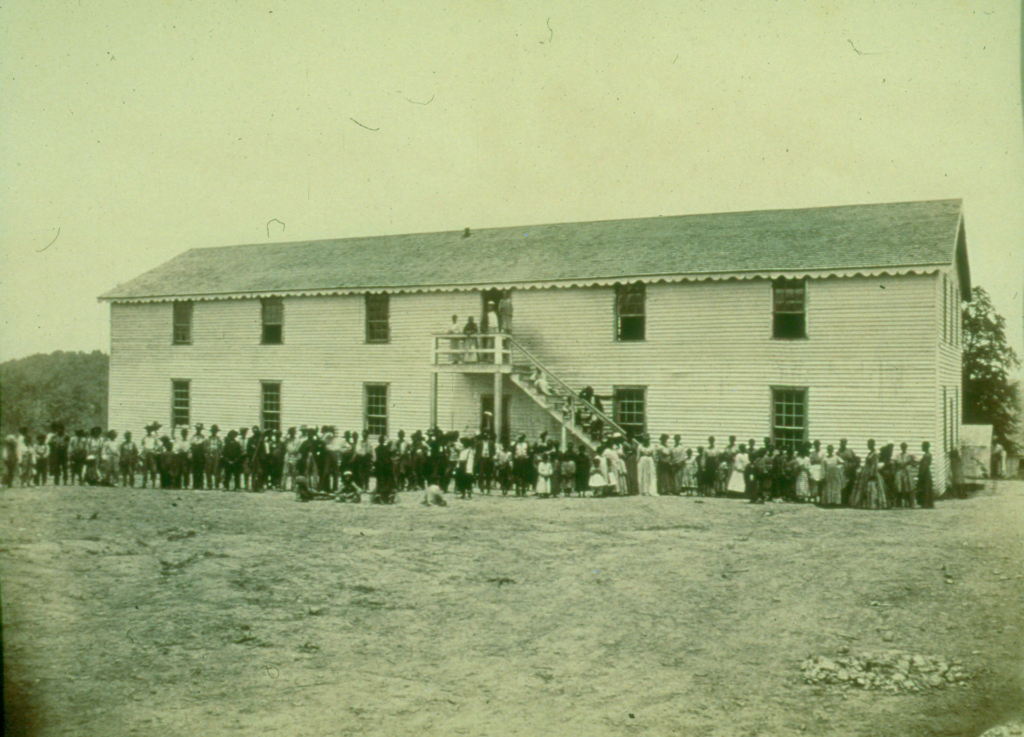
Camp Nelson Museum Project: Team Interviews
Dr Kristen Treen
Lecturer in American Literature
I’m from the Welsh Marches in the United Kingdom. The Marches sit right on the border between England and Wales; the area is rural, spotted with woodlands and market towns, and traces of its own long and fascinating history, including ancient stone circles and Iron Age hill forts.
My research is mainly interested in the ways that the Civil War’s material culture – especially the ruined, ransacked, destroyed things the war left behind in homes and on battlefields – inspired writers to rethink what they thought they knew about memory, about propertied individualism, and about the idea of ‘nationhood’ in the war’s wake. This work has looked at a host of Black and white writers, from Frederick Douglass and Elizabeth Keckley through Walt Whitman, Herman Melville, Elizabeth Stuart Phelps, Mary Murfree and Emily Dickinson. It has examined the literary afterlives of objects from the debris collected and repurposed as battlefield ‘souvenirs’ and the broken furnishings of white, slaveholding Confederate homes, through items of clothing and handiwork donated by free Black citizens to refugees from slavery in acts of mutual aid, to traditional public monuments to the war.
I’m also very interested in how these writers are thinking about personal memories of the war, and how these relate to its public commemoration – through a range of forms and expressions we might not immediately connect with the more conventional public monument, but which nevertheless play important roles in the construction and perpetuation of ‘Civil War memory’. I’m currently planning projects which investigate the kinds of forgetting that took place in the years immediately following the war, and that build on our current project research into Black commemoration of the Civil War’s events.
I founded the Commemorative Cultures project with my co-editor Dr Jill Caddell in 2019. The idea for the project emerged in the years preceding, as cities across the U.S. responded to the horrific murder of nine African American worshippers at the Mother Emanuel AME Church in Charleston, South Carolina, on 17 June 2015, by a gunman who had posed with Confederate paraphernalia, by removing Confederate statues from their pedestals. As we know, that event prompted a reckoning with the arguments used to uphold these objects; with the racial violence they appear to validate; with the state and federal systems that preserve and maintain them; with the kind of ‘history’ they purport to set in stone; and with the concept of the ‘monument’ itself.
As monuments were removed from New Orleans to Richmond, I was approached by publications in the UK to write short pieces explaining the removal of certain monuments, their histories and their implications for the public landscapes they were a part of. How had these monuments ended up in prominent public spaces in the first place? Had they been instantly accepted at the moment of their dedication, or had citizens objected to them from the start? And what would it take to challenge the hold these markers of the past exercise over the present?
As a scholar with archival experience, I knew where to look for answers to these questions. With Dr Caddell and a team made up of students and colleagues from the St Andrews School of English and School of Computer Science, I set out to create a researcher-friendly, educational resource that might help communities seeking to reckon with these monuments do so for themselves.
I have been told that when I was a kid, my parents (who were reenactors themselves) took me and my siblings to a U.S. Civil War reenactment in Llandrindod Wells, mid-Wales (no joke!). While my dad has long been a Civil War buff, I think I have to attribute my interest in the Civil War to reading and research into the war’s battlefield photographers that I undertook during the final year of my undergraduate degree. I was fascinated by the way photographs became, for some readers and writers, mementos of the unknown dead which held a haunting physical significance: some commentators were struck by the way that the same sunlight that was gradually decaying the unknown dead on the battlefield was also capturing their images for perpetuity. This led me to explore how and why things mattered to writers seeking to lay hold of the war’s events, to explore its lasting significance, and to commemorate it.
I have never worked on a public-facing project of this scale before, so in many ways this is a new challenge for me. I suppose the closest I’ve come to public-facing outreach work in the past has been in my relationship with the Mid Powys Youth Theatre (MPYT), a theatre group for young people based in rural Mid-Wales, which I attended when I was growing up. After I left Mid-Wales for university, I returned to MPYT three times to co-write and -direct plays for the company with my friend and collaborator Rhiannon Ashcroft. For our last show, we wrote an original script, based on a Gabriel García Márquez short story, about a group of children who find an old boat and discover that they are able to sail it on a pathway of light.
This conceit gave us an opportunity to write a play which visited and contemplated growing up in the Welsh countryside. Given that Mid-Wales is landlocked, having a boat as our vehicle offered a way of defamiliarizing the journey through a landscape that we, our cast of young people, and our audience, knew so well; it gave us a means to see it from another perspective, to contemplate it from another angle and to celebrate the unique and strange about our local area – things we might often take for granted. One of my favourite parts of this process was performing an excerpt of the play up in the Welsh hills, at the Willow Globe, a community theatre venue run by the Shakespeare Link group. We took the boat we were using as a set piece up into a field to perform; seeing it against the backdrop of the Welsh valleys was magical. It also speaks to the imaginative power of collective endeavours, to the places you can reach by working as a team and thinking beyond the ordinary, the known, and the expected. Today, I serve as a Member of MPYT’s Board of Trustees.
My work on the war’s material culture took me all over the U.S. during my PhD, from Washington DC, New York City, and Atlanta, GA, to Richmond, VA, Nashville, TN, Philadelphia, PA, Boston and Concord, MA, and Chicago, IL, among other states. Whenever I get to a new U.S. city I generally get to the nearest monument. In Boston, during a visit to the Massachusetts Historical Society to research the 54th Massachusetts Infantry Regiment, I had a special moment visiting the Augustus Saint-Gaudens monument to that regiment on Boston Common: there’s nothing quite like visiting a site, or text, or artwork that you’ve spent countless hours of your life reading about and thinking your way into, or to finding, at eye-level, the irresistible momentum of the Black troops’ marching legs, their purpose and its motion captured in bronze
I am most excited about investigating the networks of Black aid that supported USCT regiments and women and children refugees from beyond Camp Nelson’s walls. We know a lot about the white aid organisations that fed, clothed, and educated refugees when they arrived at the Camp, many of whom spoke out against the November 1864 expulsion. But we don’t know nearly as much as we should about the Black aid organisations in Kentucky – many of them run by women – who provided physical and moral support and drew on the generosity of untold numbers of Black citizens to do so. I’ve begun uncovering reports about and speeches delivered by some of these groups and individuals already. But looking into their stories is key, I think, to understanding Camp Nelson in context; to reckoning with the fullest significance of this place for Black Kentuckians beyond the events that took place within its fortifications.
Dr Clare Fisher
Leverhulme Research Fellow
I was born in Alexandria, Scotland, but moved to the Isle of Man when I was about 8 years old. I then returned to Scotland for university so have spent most of my life between both places!
I have been fascinated by monuments and public sculpture in the United States since I was an undergraduate and ended up writing my PhD on the topic. My main interests relate to the visual and material cultures of Civil War commemoration, particularly how slavery has been represented (or not) in the public sphere. At the moment, I am researching the long-term impact of temporary structures, such as slave cabins and refugee camps, and their bearing on twenty-first century conceptions of monumentality.
I first became involved in Commemorative Cultures as a PhD student at St Andrews in 2021 and have been working on the project in both teaching and research roles more or less ever since. I have contributed to the site’s library of interpretative essays, produced pedagogical materials and research content, and had a key role in development of the ‘Footsteps to Freedom: Camp Nelson’ digital exhibit alongside Kristen and Kamila. Most recently, I served as the course coordinator for ‘Monuments: Conflict and Movement’ an undergraduate course at the University of St Andrews which involves students in forwarding the project’s data-gathering and interpretative aims.
I had some inspirational history teachers in secondary school that really encouraged my interest in the United States. I remember learning about the Roaring Twenties, Great Depression and New Deal, Cold War, and became fascinated by the country’s complexity, contradictions, and culture. This led me to pursue history and art history at university, where I opted for courses with a US focus, such as the American Folk Music Revival and American Art and War. As mentioned, the country’s art and public monuments ultimately became the subject of my PhD. My interest in the Civil War came through the work of Kirk Savage, whose field-defining books Standing Soldiers, Kneeling Slaves and Monument Wars set me on the course of studying Civil War monuments and memory in connection with social justice.
Between 2022-3, I worked as an NEH Public Humanities Fellow at St Mary’s College of Maryland, where my work centred on the college’s recently built Commemorative to Enslaved Peoples to Southern Maryland. One of my main tasks was to develop a community-informed conceptual framework and capacity building report for the monument’s future. What I enjoyed most about this role was the opportunity to connect with members of the local community and work collectively towards shared goals. Having a practical application for my research was also rewarding and something I was also fortunate enough to experience previously as a research associate for the public art and history studio Monument Lab, where I learned the ethics and impact of public engagement and the joy of working as collaboratively for change.
My research has taken me all around the United States, mainly looking for and photographing monuments! I have spent a lot of time in Maryland and Pennsylvania, but also Richmond, New York, and DC. I am probably most familiar with the archives of these cities and have spent many hours in the Virginia Museum of History and Culture and the Smithsonian Archives of American Art. A highlight for me was exploring the recently acquired papers of the artist Beverly Buchanan, whose ‘shack’ sculptures explore the idiosyncrasies of people and the places they inhabit.
So many things! I am looking forward to discovering more about the women and children who lived and died at Camp Nelson’s Home for Refugees and how their experiences can be commemorated as well as centred in museum interpretation. I am also looking forward to hearing more about what Camp Nelson means to people today and how it can reshape public understandings about emancipation and Civil War monuments more broadly.
Dr George Francis-Kelly
AHRC Research Fellow
I’m originally from London, England. But study and research has taken me all over northern England, Scotland, and Ireland – I've lived in five different cities since starting university in 2011.
I’m primarily a social historian: I’m interested in uncovering and telling the stories of everyday people making a big difference, fighting for what is right, and being recognised. This has usually been focused on African American history: in Los Angeles in the 1980s, or at Historically Black Colleges and Universities in the South.
But I’m also very interested in the ways geography has intersected with history – how the spaces around us are important in shaping our identities and our experiences, and how we then alter the environments we live in. That’s what makes Camp Nelson such an exciting site to explore: from military posts to churches and hospitals, it’s community building and institution building which materially affects the experiences of emancipation.
I joined the project in October 2025. Laura and I are primarily responsible for the development of the community co-production programme and elements of the project, and I’m so excited that people who are invested in the histories of Camp Nelson get to be at the forefront of the project.
I think US history is so prominent in popular culture, even when you’re growing up in Britain: music, video games, movies, etc, so that really ignited an interest. But doing more US history at university showed me how prominent struggles for freedom and justice have been in this story, and that’s really what encouraged me to pursue this permanently.
I have done some smaller scale public history projects, working with others to design exhibitions in the UK and elsewhere. This is the most ambitious project I have ever been a part of. I’m really excited that this research can move beyond academic publications and reach a wider audience. I think Camp Nelson has such a rich, complex history and working with a diverse range of people to think about how we tell this story is definitely the most challenging but enjoyable part of the project.
It has taken me to 12 different states and around 17 different cities, mostly in the South but also to New York and California! I’ve loved getting to uncover new stories which you find in the archives, and which haven’t been told by historians yet. A real highlight was being at Fisk University in Nashville and getting to explore original blueprints nearly 100 years old produced by McKissack and McKissack, one of the first African American-owned architectural firms in the United States.
I’m hoping to find out more about the buildings, grounds, and spatial arrangement of the refugee camp. There’s lots of evidence that at other ‘contraband’ camps, those who were liberated exerted a lot of agency over how these camps looked and their functional uses. If we can explore the same things as Camp Nelson, we can better understand how those living there hoped and dreamed for a post-emancipation future.
I’m also really excited to learn about how people feel about Camp Nelson’s history: what it means today in the context of Kentucky’s public history and how we can develop ways to reflect this within the museum and grounds.
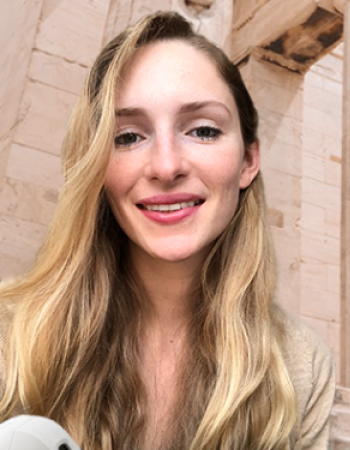
Dr Kamila Oles Leverhulme Research Fellow
I am originally from Poland, but for the past 17 years, before moving to Scotland, I lived and worked in research, art, and heritage institutions in Prague, Berlin, Milan, Vienna, and Tampa, FL. This experience has given me a broad comparative perspective on different institutional cultures and on what practices work well in varied academic and museum contexts.
3D digitisation for advanced research and documentation and digital scholarship in Art History and Heritage, combined with hybrid curatorship and immersive exhibition design, enhancing exploration of contested heritage and co-curation. This includes topics such as inherited trauma, multi-generational war-refugee experiences during the war and post-war period, the visual language and curatorial strategies for communicating contested heritage in public spaces, which I have developed in collaboration with the United Nations House in Scotland (UNHS).
I joined the CC team in January 2022 as a Research Fellow in Digital Curation and Design to work with metadata and visualisation, while working on digital heritage at the School of Computer Science. At that time, our team was small and largely volunteer-based, but through sustained effort we recently secured funding to hire two new team members, a success we greatly celebrate.
In my case, the question should be, “who sparked your interest in the Civil War?” and the answer is Dr Kristen Treen. However, the history of the Civil War has long formed part of primary, secondary, and high-school education in Poland, alongside broader teaching on the pre-Civil War U.S. history, where figures such as Kazimierz Pułaski and Tadeusz Kościuszko (who, over sixty years before the Civil War, advocated for emancipation and used his estate to free and educate African-American slaves), are commemorated for their contributions to the history of the United States.
Also, at the University of South Florida, I had the opportunity, as a member of staff, to enrol in selected courses of interest. I chose a course in U.S. history both to learn locally about the country in which I was living and to examine how U.S. history is taught in the United States, enabling a comparison between European and American narrative approaches. While living in the United States, I travelled across 24 states, exploring my interests in pre-U.S. and U.S. heritage, e.g., Navajo Nation culture, Amish communities, Ancestral Puebloan Cliff Dwellings, Chaco, and Mississippian archaeological cultures, as well as blues and jazz festivals, e.g., in Memphis, New Orleans or St Louis.
Over the past ten years, all projects I have developed have been public-facing. I have used co-curation methodologies for immersive exhibition design, digital exhibits, and VR/AR apps in cultural heritage, reflecting my belief that social impact is central to humanities research. This is also what I teach students, guiding them in exhibition design and heritage preservation methodologies, e.g., through the session I taught in Digital Museum or the module I created for St Andrews and Charles Universities: ‘Inclusive Community Building through Digital Heritage Preservation in Times of Crisis’.
While conceptualising and developing the successful AHRC Catalyst and Leverhulme proposals with Kristen and Clare, experts in Civil War commemoration, I was simultaneously leading the co-curation of a permanent exhibition with a community in Scotland, which allowed me to directly and continuously verify practical requirements and guidance needs that informed the proposals. Combining my expertise with Kristen’s and Clare’s enabled us to refine key research and impact priorities and develop a novel, interdisciplinary workflow for continuing our collaboration with Camp Nelson.
This is a strong example of how community co-curation and digital methodologies are widely transferable; the Civil War is just one instance, as demonstrated by my previous community co-production and collaborations with colleagues in Computer Science, Medicine, Art History, the UNHS, and other public institutions, heritage organisations, and community trusts across the U.K., U.S., and Europe.
In the U.S., I participated in numerous projects digitising collections from museums and other heritage custodians, e.g., Fort Foster State Historic Site, part of Hillsborough River State Park, where Seminoles and Black Seminoles fought for freedom in the Second Seminole War, foreshadowing Civil War issues.
My standout archival experience in the U.S., which ultimately had global impact led me to initiate the Picasso USF project. Focusing on archival materials, audio recordings, newspapers, chronicles, and a bozzetto in the Special Collections Library, my research, combining digital scholarship and traditional art history methods, revealed these materials related to what would have been Picasso’s largest monumental sculpture, designed for a dedicated art centre by Paul Rudolph and intended to reach the height of the Statue of Liberty. The project was covered by over 1,000 news outlets worldwide and exemplifies how overlooked histories can be recovered through archival and digital research, as well as how much knowledge missing from archives is still retained within the community.
My research focuses on the experiences of refugees from slavery and the visual languages through which these histories have been represented and communicated. This aligns closely with methodologies developed in my other projects such as Scotland’s Future Collective Memories in Fostering Unity, realised together with UNHS, where I worked with British descendants of Polish soldiers who sought refuge in the U.K. after fighting with Allied Forces in WWII, exploring how inherited trauma shaped the artistic expression of these soldiers, who were unfairly treated by the armies they fought for, and in the artistic production of their descendants.
I have translated this approach to my work at Camp Nelson, which has already yielded significant findings. I welcome opportunities to test and adapt these methods across different historical contexts, including the American Civil War and post-WWII refugee experiences, particularly through research on visual culture, artistic production, and co-curation with multiple generations of war-affected families, trying to collectively learn lessons for improving an inclusive future.
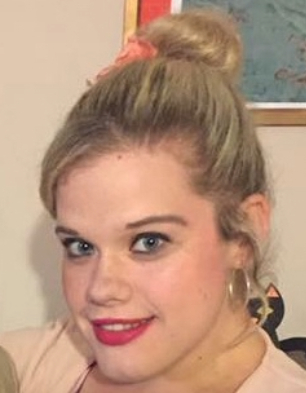
Dr Laura Wilson
AHRC Research Fellow
I grew up in a small town in Oxfordshire, England and took my undergraduate degree in English Literature at the University of Oxford, followed by my Master's at the University of Exeter. In 2015, I moved to the United States to pursue a PhD in English at the University of Mississippi. Following this, I was a Council on Library Information and Resources Postdoctoral Fellow at Fisk University, Nashville. Before joining the Commemorative Cultures team at the University of St Andrews I worked at the British Library in London.
I specialise in 19th and 20th century American literature. While I began my academic journey heavily invested in American Modernism, most particularly the work of William Faulkner, I now concentrate more heavily on African American literature.
My doctoral dissertation examined soil as a medium for racial uplift in texts by figures such as Booker T. Washington, W.E.B. Du Bois, and Zora Neale Hurston. I’m thus extremely interested in African American responses to the environment. My work is informed by theories of Black Atlantic modernity from scholars such as Houston Baker and Paul Gilroy, as well as material culture studies.
My newest research project examines representations of the plantation in texts set in the contemporary moment and has allowed me to branch out into studying more Black British authors, and Young Adult/Teen+ fiction, as well as beginning to work closely with film and photography.
I joined the Commemorative Cultures team in November 2025 as an AHRC Catalyst Grant Research Fellow, working on the museum refit project at Camp Nelson, with a focus on outreach and impact.
I was lucky enough to grow up making frequent visits to the United States, including Florida, New York, Washington DC, and Philadelphia, and was always so interested in the wide-ranging history and culture of the nation. I really started learning more about 19th and 20th century American history in my GCSE History lessons, and although I didn’t take History to A Level, this knowledge still augmented my studies in English Literature, particularly when writing A Level coursework on John Steinbeck’s The Grapes of Wrath.
As a Faulknerian, it’s impossible not to contend with the shadow that the Civil War casts on his fiction, and the complex legacy it has left in the US South both of Faulkner’s day and today, which the author himself wrestles with in interesting ways. Living in Mississippi for five years brought me even closer to the setting of Faulkner’s writing, broadening my understanding of the region and its history, including trips to Shiloh and Holly Springs, as well as the Corinth contraband camp, a location not dissimilar to Camp Nelson.
I have always been passionate about widening public access to historical research. In 2019, I took part in Joseph McGill’s Slave Dwelling Project, involving an overnight stay at a historical dwelling of the formerly enslaved in Mississippi. Following this poignant experience, I wrote a reflective blog post for McGill’s website, which was shared widely across social media.
In 2022 meanwhile, I initiated Fisk University’s involvement in Frederick Douglass Day, working with the Special Collections librarian to prepare archival and open shelf materials for display. I designed QR-code-based interactive resources for participants and even baked cupcakes for the occasion!
From 2024 to 2025 I was a tour guide and advisor for the Black Oxford: Untold Stories walking and bus tour, which commemorates the contributions of historically overlooked Black scholars at the University of Oxford. Throughout all my public history experiences I try to demystify the idea that archives and historical research are the sole purview of academics and so I’m really looking forward to encouraging community collaboration and co-curation as part of the Camp Nelson project.
Seeking a very hands-on and embedded approach to my research is what led to me living in the United States for seven years. I have used archives in my own research, or as a research assistant many times. One example of this was when I visited the Tennessee State Archives to look for the presence of enslaved individuals among the papers connected to Travellers Rest Plantation in Nashville.
Much of my archival experience however comes from the other side of the desk; my two-year postdoctoral fellowship at Fisk involved archival digitisation, while my role at the British Library included metadata creation and maintenance of the archives and manuscripts catalogue. Almost every day at Fisk was a pinch-me moment in handling amazing archival material. As part of the library team, I was privileged to carry keys to the archive, meaning that I could see documents from some of my biggest research inspirations—Booker T. Washington, W.E.B. Du Bois, Langston Hughes, Charles Chesnutt, Frederick Douglass—whenever I liked. While writing a grant to enable us to digitise some of the most significant items related to the history of the University (colloquially called “Fiskiana”) I discovered a collected volume of exam papers which included Du Bois’s commentary on Phaedo for Freshman Greek, and his answers to a Junior examination in Physics. It was incredible to be holding in my hands the very paper and ink that an undergraduate Du Bois would have held in the 1880s, simultaneously showcasing the importance of archival preservation in ensuring the continued survival of these documents.
Another cool moment was when I was allowed to hold the Grammy won by the Fisk Jubilee Singers in 2021. Those awards are a lot heavier than the winners would make you believe when they are holding them aloft in celebration!
Given my interest in African American responses to the environment, I'm most excited to explore the physical landscape of Camp Nelson through its significant geological features, such as Boone's Knob and the Kentucky River. I’m interested in how the natural world impacted the lived experiences of those in the camp considering for instance environmental risks such as flooding, muddy conditions, or the use of lumber and livestock within the camp.
This also feeds into my interest in understanding how African Americans respond to green spaces and National Park Service sites today, influenced by the work of scholars such as Carolyn Finney in her book Black Faces, White Spaces: Reimagining the Relationship of African Americans to the Great Outdoors. I’m looking forward to engaging with this as part of the public outreach sessions, hearing more from local communities about their own personal investments in Camp Nelson.